James Joyce’s brother found himself in the crosshairs of the fascist authorities both before and during the Second World War.
In 1905, James Joyce was joined in Trieste by his younger brother, Stanislaus. For the next 10 years, Stanislaus played “Sancho Panchez…to James’ Don Quixote”, in the words of Richard Ellmann, until James left Trieste for Zurich in June 1915, shortly after Italy declared war on Austria-Hungary, for which Trieste was the main outlet to the sea. Stanislaus was not so lucky, being interned in a castle in Austria in January 1915 on account of his citizenship of an enemy state as well as his friendship with Italian Irredentists in the city.
In 1921, with Trieste now part of Italy, Stanislaus was appointed to teach English at the economic and business faculty at the city’s Commercial University—a position he was to maintain until his death in 1955, with a couple of major interruptions. One of these came in April 1936, shortly after Fascist Italy invaded Abyssinia when, according to the Irish minister to Italy, Michael MacWhite, Stanislaus “came into disfavour with the Italian authorities…because of his unsympathetic activities”.
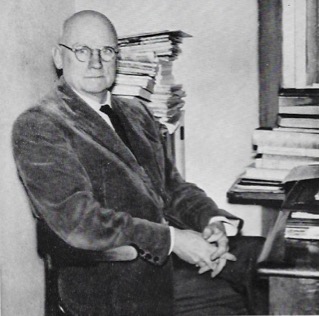
Dismissed from his job and served with an expulsion order, Stanislaus travelled to Zurich to meet his brother James, who had found a teaching position for him in the nearby town of Zug. But Stanislaus turned down the offer and decided to go back to Trieste instead. Then, in May 1937, after considerable lobbying by influential friends, he was reinstated to his old job at the university.
Like his famous brother, Stanislaus jealously held on to his British passport—but upon Italy’s declaration of war on 10 June 1940, he rushed down to Rome to fill out his application for an Irish one. Nonetheless, Joyce was once again dismissed from his teaching post in October 1940 without pay and served with another expulsion order. He decided to try to find refuge in Switzerland more purposefully than he had in 1936, but this plan was scuppered when the Swiss informed him he would have to deposit CHF20,000 in their country.
In the end, MacWhite’s intervention meant that Joyce managed to avoid expulsion from Italy altogether although he was told he could not stay in Trieste, which was declared off-limits to foreigners. And so, Joyce went into ‘internal exile’ in Florence just after Christmas 1940. Knowing nobody in the city and required to sign in at police headquarters each day, he used up his meagre savings and what he earned from teaching English to private students to pay for his bed and board with a family.
Stanislaus’ more famous brother had also been displaced by war by this stage. James Joyce left Paris for a village near Vichy in December 1939, but for a series of motives moved to Zurich a year later. It was from there that James Joyce sent a postcard to Stanislaus dated 4 January 1941, purportedly his last written message to anybody. On the postcard was a list of names of people who might be able to help Stanislaus, including Ezra Pound, by that stage a wholehearted supporter of Fascism and Nazism. James Joyce died in hospital nine days later.
Stanislaus was frequently ill, a medical certificate from June 1942 stating that he was suffering from enteritis and a stomach ulcer, and that he had lost 20 kilos of weight. Any intervention by Pound or others seems to have had limited effect, for Joyce was to remain stuck in Florence until the end of the war. His wife, Nelly, stayed some time with her husband resulting, 15 years after they married, in the birth of their only child, James, in February 1943.
Stanislaus Joyce returned to Trieste in 1945, at which time he gave up his Irish passport for a fresh British one. As well as returning to his job as English lecturer at the university, Stanislaus found work as an official interpreter for the Allied Military Government in the city. He also broadcast English lessons over the local radio station. Stanislaus gave his last lesson at Trieste university just three weeks before his death on Bloomsday (16 June) 1955.
 Roman imbroglio
Leave a comment